Ourcq, matière première
Du parasite à la ressource, valoriser la prolifération du myriophylle en opportunité constructive
2025
Auteur(s)
Elisa Chainiau, Mathys Ninino
Enseignant(s)
Colin Reynier, Soline Nivet
Département
PASS
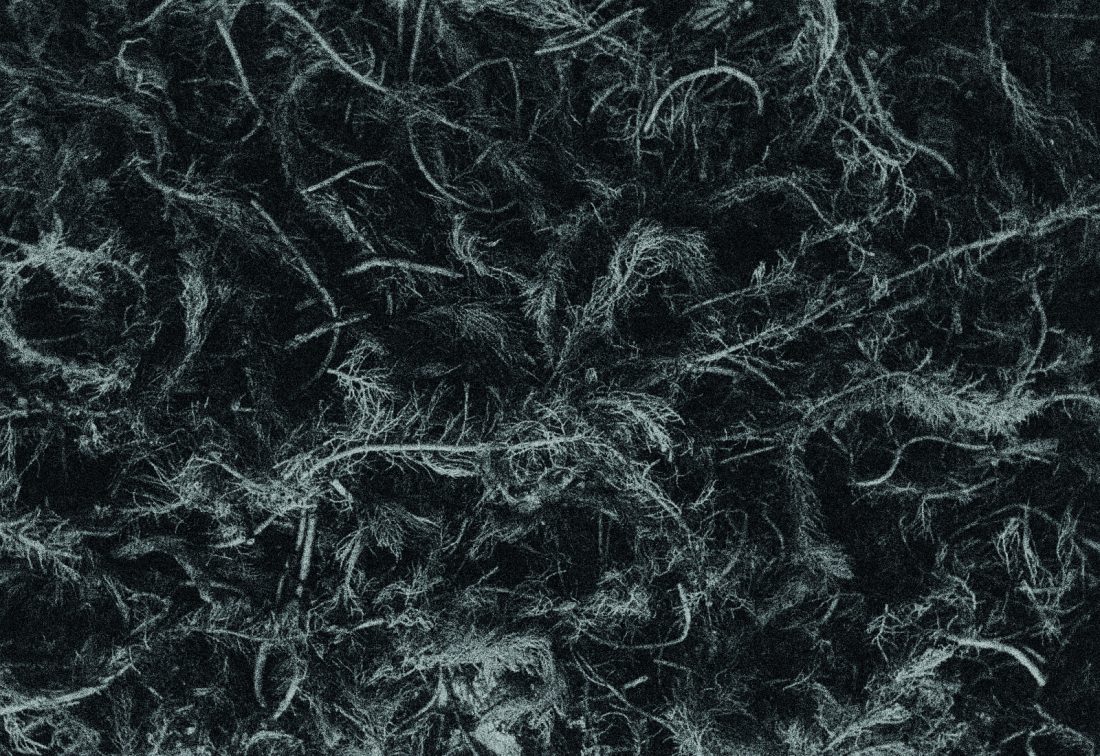
Ce projet part d’une enquête, d’une approche ancrée dans le territoire mêlant la petite et la très grande échelle. La présence d’une plante invasive, le myriophylle aquatique, proliférant dans le canal de l’Ourcq sans réelle solution d’endiguement questionne le devenir d’une infrastructure complexe. Le canal reste une entité nécessaire mais à l’équilibre fragile que le myriophylle vient perturber. Amené à s’étendre toujours plus du fait du réchauffement climatique et des coupes d’entretien favorisant paradoxalement son expansion, le myriophylle est pour le moment un déchet dont on ne sait pas s’emparer. Notre démarche s’appuie sur ce constat, que faire pour valoriser et transformer une menace en ressource ?
A partir de comparaisons à d’autres filières biosourcées, « Ourcq, matière première » s’emploie à en imaginer une nouvelle. Entre expérimentation et analogie, notre projet tend à initier la recherche et la production d’un nouveau matériau de construction sur la friche Kodak de Sevran. Un ancien site industriel bordant le canal visant à le redevenir en partie, plus en accord avec les enjeux de notre temps.
This project is based on a survey, an approach rooted in the territory, combining the small and the very large scale. The presence of an invasive plant, water milfoil, proliferating in the Ourcq canal without any real containment solution, raises questions about the future of this complex infrastructure. The canal remains a necessary entity, but its fragile equilibrium is being disrupted by milfoil. With global warming and maintenance cuts paradoxically encouraging its expansion, milfoil is currently a waste product that we don’t know how to deal with. Our approach is based on this observation: what can be done to turn a threat into a resource?
Based on comparisons with other bio sourced industries, Ourcq, matière première, sets out to imagine a new one. Between experimentation and analogy, the project aims to initiate research and production of a new building material on the Kodak wasteland in Sevran. A former industrial site on the banks of the canal, part of which is set to become one again, more in tune with the challenges of our time. Then, as an extension, the hypotheses surrounding this new material and the reflection on its possible concrete applications allow us to question the transformation of ordinary domestic heritage.