Sous surveillance
Un théâtre pour 1984
2026
Auteur(s)
Camille Duhamel
Enseignant(s)
Rafaël Magrou, Bertrand Lamarche
Département
AAP
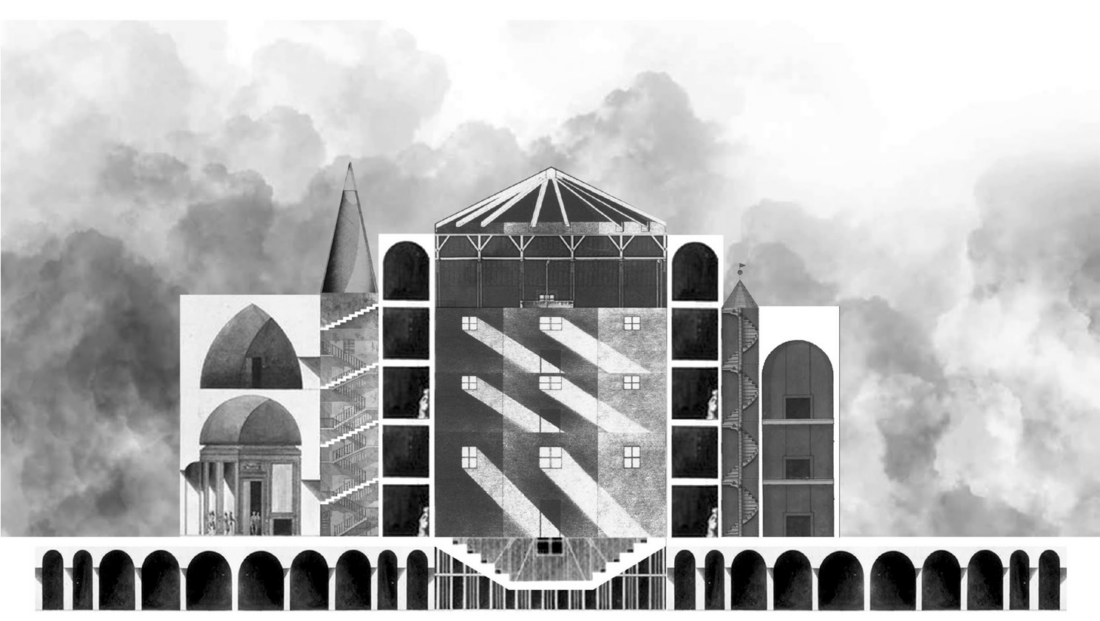
Partant du roman 1984 de George Orwell, écrit en 1948, le projet explore des scenarii de mise en espace de ce texte qui aborde la question du contrôle de la population par la surveillance et la manipulation de l’esprit. Le regard devient un outil de pouvoir pour conditionner les comportements, à la manière d’un panoptique. Empruntant au dispositif théâtral comme organisateur des corps et des regards dans l’espace, il est employé comme support et vecteur d’emprise sur les spectateurs. Il est donc paradoxal d’adapter 1984 pour un tel espace, alors même que le roman vise à dénoncer les dérives autoritaires. Pour cette raison, le projet explore des formulations théâtrales cherchant à repenser l’espace de la représentation pour cette œuvre. L’objectif est de générer une construction enchaînant des situations où le spectateur, individuel et/ou en groupe, est libre, orienté ou contraint de déambuler au fil du narratif de l’œuvre. Il découvre l’histoire par fragments, construisant son propre parcours afin de se libérer du dispositif spatial autoritaire.
Version numérique en ligne (réservée aux abonnés ArchiRès)
Drawing on George Orwell’s 1984, this project explores a spatial adaptation of the novel, which examines the control of populations through surveillance and psychological manipulation. The gaze becomes an instrument of power, shaping behaviour in a panoptic logic. By considering theatrical space as a dispositif that organizes bodies and spectators’ gazes, the project questions how theatre itself may reproduce similar mechanisms of control. Adapting 1984 within such a framework therefore appears paradoxical, since the novel aims to expose and criticize authoritarian systems. For this reason, I explore alternative theatrical forms that rethink the space of performance. Rather than being subjected to a fixed staging, spectators are invited to move freely, discover the narrative through fragments, construct their own path, and reclaim an authoritarian spatial dispositif by actively engaging with it.